
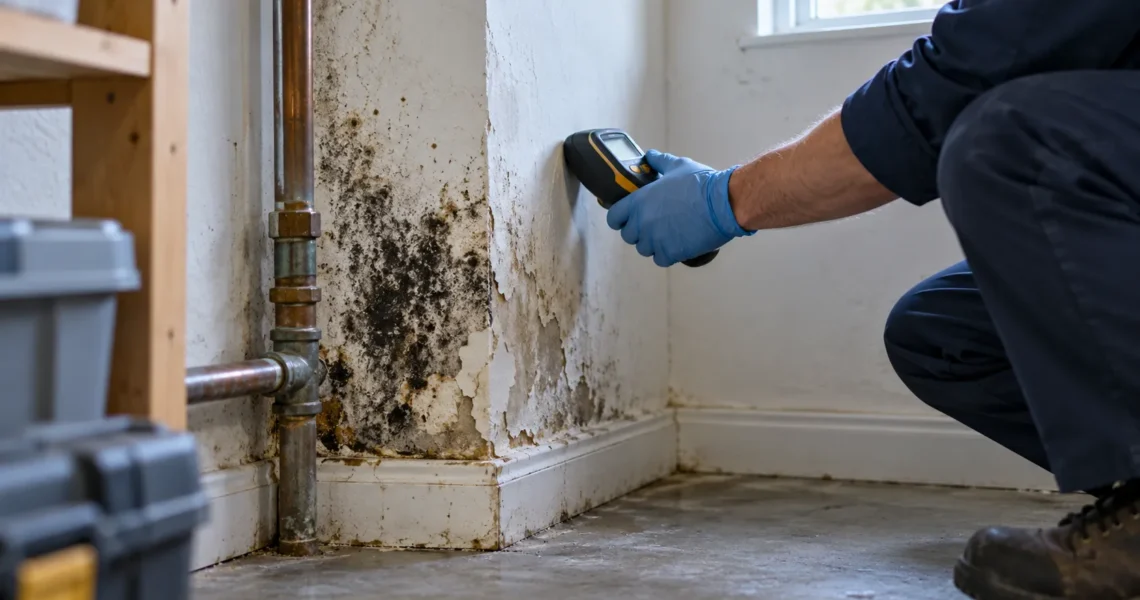
It often begins with small signs. Black spots around your window. A damp, moldy smell when you go down stairs to do your laundry. Small bubbles in the paint behind your kitchen cabinet.
We often wipe it up with a cloth, open a window and move on. This will work for a short period of time.
The issue with mold is that it is a symptom of a larger issue. Whatever is causing it to remain damp will cause it to return no matter what you do to remove it.
Before we get into removing mold, let’s talk about why your area is getting damp. There are various causes that can cause mold to appear and require vastly different solutions.
If you live in Toronto or the GTA then you’ll know our weather isn’t the best. A dry basement in July can easily become damp after a large storm in Spring or once the snowbanks start to melt.
In this guide, we’ll discuss what causes mold, what to look out for, how to safely remove a small amount and when to give us a call.
What Causes Mold?
The main cause of mold is moisture. Give it a damp surface and it will grow!
Instead of asking how to kill mold, ask why it is damp.
Take a minute to identify why you’re getting mold. If it’s your bathroom ceiling getting damp every time you have a shower then it will be very different to mold on your basement wall from a storm.
Leaking Pipes and Fixtures
Some leaks are obvious. If you have a burst pipe or water leaking from under your sink then you’ll know.
However, mold is often caused by a slow leak. This can be a loose connection that only leaks when you turn on the tap or a pipe behind your wall that has been seeping into your drywall for months but not dripping onto the floor.
To help identify, take a look at:
- Behind your sinks – Supply lines and drain.
- Inside your dishwasher cabinet.
- Behind your washing machine – Hoses and connections.
- Around your toilet.
- Any visible pipes in your basement.
- Floor and walls around your tub/shower.
Also take note of when it is becoming damp. If your cabinet floor is getting completely soaked every time you empty your sink then let us know. This will save us time looking for the leak.
Condensation on Cold Surfaces
Have you ever had your drink sweat on a hot day? Your home can do the same thing.
Warm, humid air hitting a cold surface such as your window, cold water pipe or outside wall will cause condensation. If it is happening in the same place every day then mold will love it.
This is a big one in Canadian homes in the winter. It is very cold outside and warm inside which means you will have dripping windows every morning.
However, this doesn’t necessarily mean your windows are leaking. See if the water is on the inside of the glass and if you are experiencing this in other rooms.
Poor Ventilation in Bathrooms/Kitchens
Every time you have a hot shower or boil a pot of pasta you are adding moisture to the air. If your extractor fans aren’t working and venting outside then it will cause issues. Believe it or not, a lot don’t!
If your mirror is still misty 20mins after your shower or your ceiling feels damp then your fan likely isn’t doing enough.
You can paint over your ceiling but it will only look nice for a short period of time. The room will still remain damp and mold will find its way in.
Water In/Leakage in Basements
There are many reasons why basements can become damp. It could be water getting in from outside, a leak in your plumbing, an issue with drainage or your sump pump has stopped working.
Look for patterns. If your basement is getting damp after heavy rain then it will be very different to getting damp every time your washer drains.
Depending on where the water is coming from, there will be different solutions.
Common Signs of Mold/Damp
Sometimes mold can be tricky to spot. However, you may notice a smell.
Persistent Musty Smell
If you have an old basement smell in your closet/storage room then take note. Especially if it keeps coming back after you’ve cleaned.
Try to ascertain where the smell is strongest but don’t start pulling your baseboards off. Look in easily accessible areas. If you can, check behind your boxes and stored items.
The smell alone won’t tell you where the mold is or how much there is. If it is persistent and you can’t find the source then it is a good idea to have a professional take a look.
Spots/Stains/Discolouration
Look out for strange spots around windows, plumbing and areas where there has been water damage.
Although you may have heard that black mold is dangerous, the colour won’t tell you what type of mold you have or how harmful it is. Not all dark spots will be mold.
Ask yourself – Is it damp? Is it growing? Does it return after cleaning? This is much more important than the colour.
Peeling Paint/Damage
Bubbling paint, swollen cabinet doors and warping baseboards are all signs that water has been getting in.
Even if there is no mold, take these seriously. Often they are the first signs of a leak. The earlier you catch it the cheaper it will be to fix.
Grab your phone and take a few pictures. Note the date. If things get worse you’ll have a clear record.
How Can Mold Affect My Health?
According to Health Canada damp/moldy homes can cause issues such as itchy eyes, sore throat, coughing, wheezing and asthma attacks.
Children, older people and those with specific health conditions can be more sensitive.
However, this doesn’t necessarily mean mold is the cause. If you’re concerned that your home may be affecting your health then speak to your doctor.
You don’t need to know what type of mold you have. Simply locate the source of the moisture, fix it and ensure you clean the area properly.
How Can I Safely Remove Mold From My Walls?
Whether you can remove it yourself will depend on the size, what it’s growing on and if it’s surface level.
If it’s a small area of mold on your bathroom wall then it can easily be wiped away. However, if it’s mold inside your wall or has been touched by dirty floodwater then it will be a different story.
Small Areas
According to Health Canada’s guide to dealing with indoor moisture and mold, small areas of mold are defined as 3 or fewer patches of mold covering a total area of approximately 1m².
Medium sized areas should be assessed by a professional. Large single areas (over 3m²) should be assessed and cleaned by a professional.
If you’re unsure how big the area is then ask. Disturbing mold can spread it.
Small Clean-Up
If it is a small area then wear gloves, goggles and a properly fitted disposable N95 face mask. Move your children, pets and anyone with breathing issues to another room.
Follow the steps outlined in the link above. This includes using a HEPA vacuum.
Cleaning
Use clean water and unscented dish soap to clean any suitable surfaces. Ensure you dry the area thoroughly. Don’t use bleach as Health Canada actually don’t recommend using it on mold.
Use a damp cloth on drywall. Drywall doesn’t like water! If the mold has gotten under the paint or the drywall is soft/damaged then you will likely need to cut out the section and replace.
Don’t paint over it! We know it is tempting but it will simply hide the mold.
Why Is My Mold Coming Back?
If your mold is returning after you’ve cleaned then don’t try scrubbing harder. Take a step back and ask yourself:
- Have we identified where the water is coming from?
- Has it been fully fixed?
- Is the area still getting damp?
- Could there be damage behind the wall/under the floor?
- Is the room still poorly ventilated?
A common cause of mold returning is if someone is cleaning behind their sink cabinet every few months however the drain connection is leaking slightly every time they turn on the tap. The mold will never go away until the leak is fixed.
Replacing a rotten baseboard without asking why the wall is damp will also cause the same issue.
Keep your pictures and receipts from your repairs. If the mold returns then you’ll be giving the next person a head start.
When Should I Contact A Professional?
If there is a large amount of mold, it keeps returning or could be hidden then it is best to contact a professional.
If you have had a sewage backup then do not treat it as a normal clean up. Contaminated water and water getting into your walls/floors needs to be properly assessed.
Active Leak in Plumbing
Firstly, stop the water getting in.
If it is safe to do so turn off the water. If there is any standing water make sure you don’t stand in it if there is any chance it is near any outlets, cords or appliances.
Our emergency plumbing service in Toronto and GTA can help with urgent issues such as burst pipes, damaged water lines and leaks.
When calling us, let us know where the water is appearing, if it is still running and what you were using when you first noticed. This will help us get to the root of the problem quickly.
Water Damage Requires Restoration
Often fixing the pipe will be the first step. However, anything that has gotten wet may need to be dried out, removed or restored.
We provide flood damage restoration and mold removal services. This includes water extraction, structural drying, dehumidifying and mold inspection and removal.
Depending on what we find in your home we can help. Don’t hesitate to ask us any questions. What needs fixing? What can be saved? What will need replacing?
Drain/Sump Pump Issues
If water is coming up through your floor drain then we’ll need to take a look at your drain. We provide drain cleaning and repair services.
If your basement has flooded due to your pump failing then we also provide sump pump installation and repair. We can also install battery backups so you’re protected during a power cut.
However we will always identify where the water is coming from before suggesting a sump pump.
Need any help with plumbing or water damage in Toronto? Call Plumber To Your Door on 647-894-7354.
Preventing Mold Returning
The best way to prevent mold is to keep an eye on what caused it in the first place.
If the issue was caused by a leaking dishwasher then you’ll be looking for different things than someone with dripping windows in the winter.
Humidity & Ventilation
Health Canada recommend keeping your humidity between 30-50%. A hygrometer is affordable and will tell you exactly what your home is at.
During the colder months you may want to keep it towards the lower end to reduce condensation. Use your bathroom and kitchen extractors and make sure they are venting outside and not into your attic.
A dehumidifier can help but won’t fix a leaking pipe.
Regular Checks
Regularly empty your cupboard under your sinks so you can see the bottom.
Have a quick look around your appliances and any accessible pipes. Are there any new damp areas, staining or anything unusual?
Once you know what is ‘normal’ it will be easier to identify if anything has changed.
After Rainfall/Seasonal Changes
If your basement has leaked in the past then make a habit of checking these areas after a good rainfall.
Is there anything different since your last repair? This is the easiest way to identify if your repair is holding or if there is another source.
Before Renovations
Before laying new flooring, painting or sealing your repaired wall ask how they know it is dry.
Ask your contractor what follow up they would recommend and what signs mean you should give them a call. Keep this with your repair notes so it’s easy to find next time.
FAQs
Can I Completely Remove Mold?
You can remove the mold you currently have but no products can guarantee it won’t return. If you have a new leak or damp issue then mold can return.
Can I Remove Mold?
Yes you can if it is a small amount on a surface. However, if you’re unsure how big it is, think it could be hidden or it keeps returning then it is worth getting a professional opinion.
Does Mold Always Mean A Leak In The Pipe?
No! Often mold is caused by condensation, poor ventilation or water getting in from outside. Take note of where and when the moisture is appearing and this will tell you who to call.
Should I Buy A Mold Test Kit?
Probably not. In most cases Health Canada don’t recommend testing the air for mold. By identifying the source of the moisture and getting it inspected you’ll learn a lot more. If your situation does require further testing a qualified professional can let you know.
Will A Dehumidifier Fix My Mold Issue?
A dehumidifier can help but won’t fix the issue. A dehumidifier will help reduce humidity but won’t remove existing mold. It also won’t fix a leaking pipe, broken drain or water getting in from outside.
Should I Contact A Plumber Or Mold Removal Specialist?
If there is an active leak, blocked drain or sump pump issue then contact a plumber. If it is mold you need dealing with then contact a remediation specialist. Some issues will require both. If the water is getting in from outside or it is a ventilation issue then you may need a different specialist.
Need Help With Mold Or Water Damage In Toronto?
We provide mold removal and water damage restoration throughout Toronto and GTA. We will find the leak, dry out your home and remove the mold. Contact us on 647-894-7354 to book an assessment.